
In recent years, sustainable renovation has moved from a niche concept to a mainstream priority. Homeowners today are not only focused on aesthetics and functionality, but also on how their living environment impacts health, energy consumption, and the broader environment.
At SYNC, we believe that better living starts with better materials. Choosing the right sustainable materials can significantly improve indoor comfort, reduce long-term costs, and create a more responsible approach to construction.
Traditional building materials often contain chemicals that can affect indoor air quality and long-term health. In contrast, environmentally friendly materials are designed to reduce emissions, improve durability, and minimise environmental impact.
Using sustainable materials helps to:
A well-designed home should not only look good — it should also feel healthy to live in.
Volatile Organic Compounds (VOCs) are commonly found in paints and coatings. Low-VOC or zero-VOC options significantly reduce harmful emissions, making your home safer, especially for families with children.
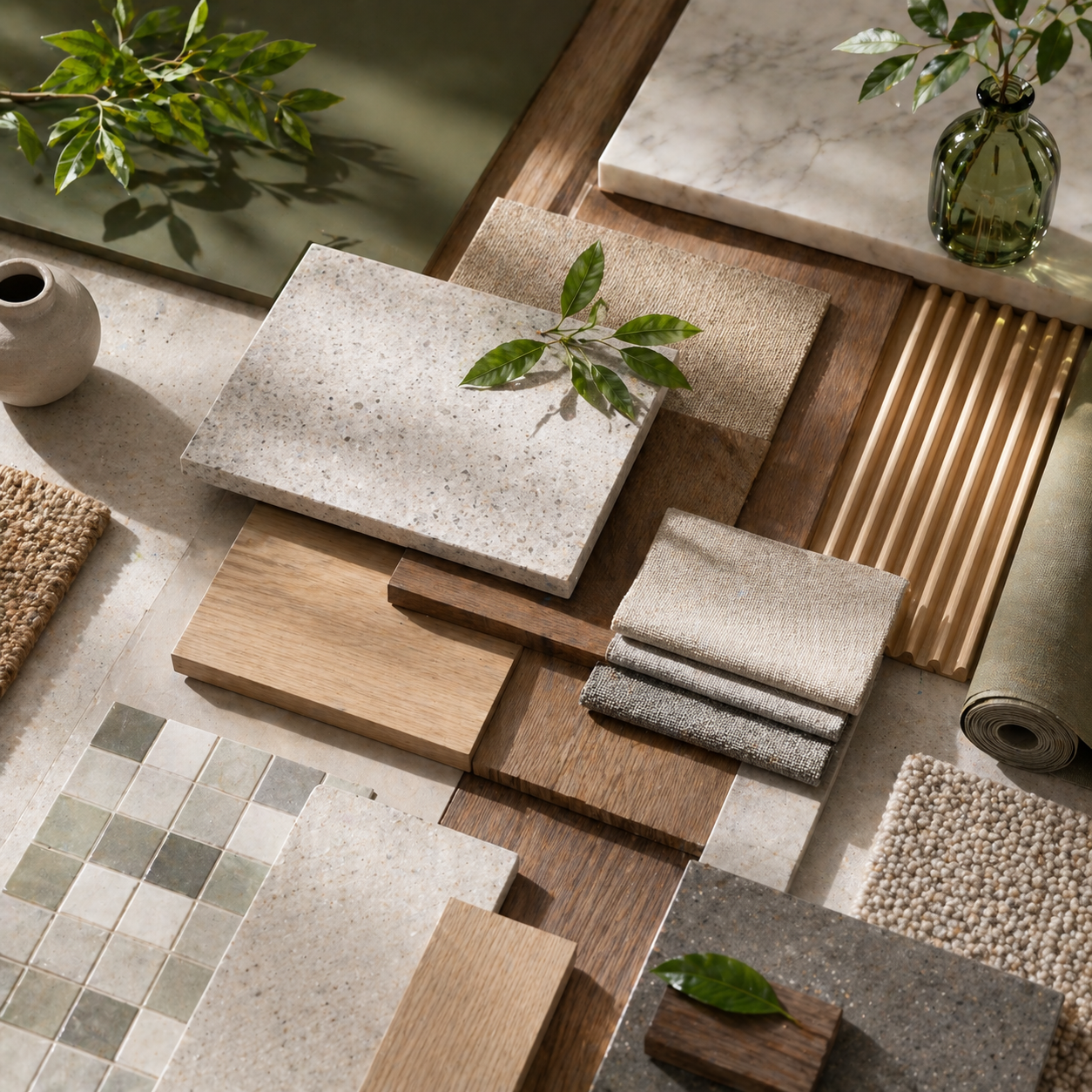
Certified timber and engineered wood products offer both durability and environmental responsibility. These materials are sourced and produced with reduced waste and better resource management.
Recycled tiles, composite stone, and responsibly sourced natural stone provide both aesthetic appeal and sustainability. They reduce reliance on new raw materials while maintaining a high-end finish.
Modern tapware, shower systems, and toilets are designed to reduce water usage without compromising performance — a key consideration in both residential and commercial renovations.
Sustainability is not only about what materials are used, but also how they perform over time.
Well-insulated walls, double-glazed windows, and thermal-efficient materials can significantly reduce heating and cooling costs. When combined with smart home systems, homeowners can further optimise energy usage through automation and real-time monitoring.
This integrated approach leads to:
One of the most overlooked aspects of sustainability is durability. Choosing higher-quality materials that last longer reduces the need for frequent repairs or replacements.
A sustainable renovation is not about short-term savings — it’s about long-term performance.
At SYNC, we focus on solutions that balance:
This ensures every project delivers lasting value.
Sustainable materials work best when they are part of a fully integrated solution. From construction and finishes to shading systems and smart home technology, every element should work together to improve how people live.
That’s where a unified approach makes a difference.
Sustainable renovation is no longer optional — it’s the future of modern living. By choosing the right materials and integrating them into a well-planned system, homeowners can create spaces that are not only beautiful, but also healthier, more efficient, and more responsible.


